How a Slow Website Is Costing You Customers
Every second your website takes to load, you're losing visitors, leads, and revenue. Here's exactly how page speed affects your business — and what to do about it.

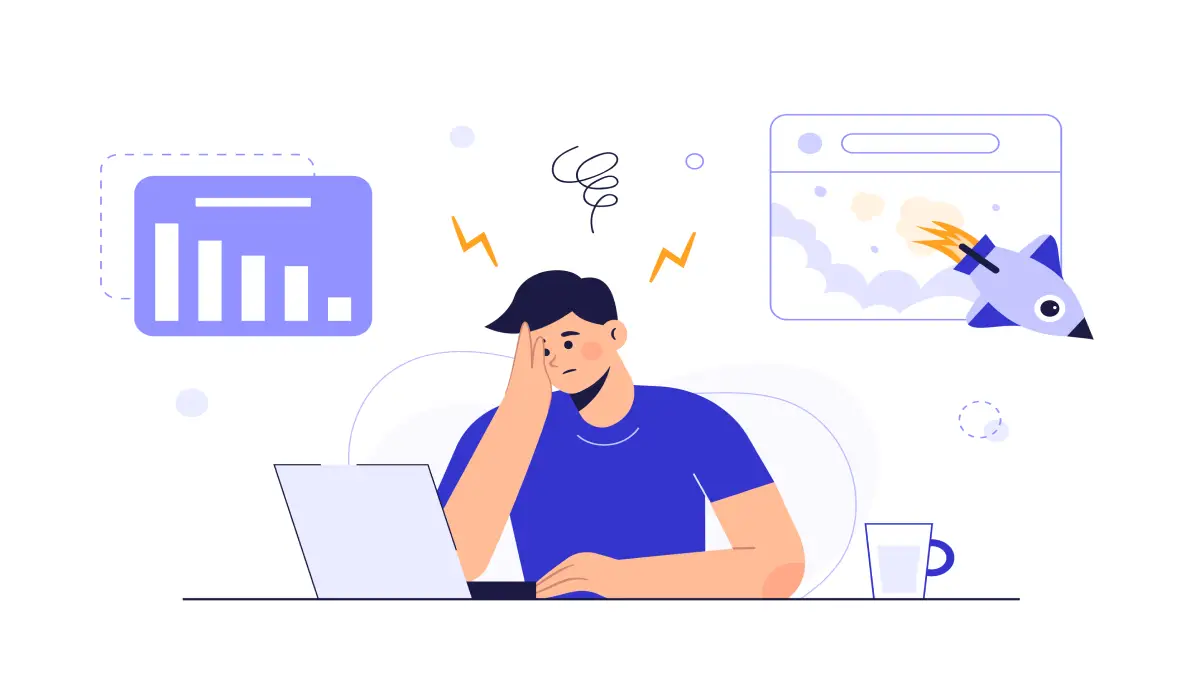
Most business owners think about their website in terms of design — does it look professional, does it represent the brand well, does it have the right information? These things matter. But there's a problem that quietly damages businesses far more than a dated colour scheme or an imperfect layout ever could: a slow website.
Page speed isn't a technical detail to leave to developers. It directly affects how many visitors stay on your site, how many of them become customers, and how easily new people find you in the first place. If your site is slow, you are losing business every single day — and most of the time, you don't even know it's happening.
1. Visitors Leave Before Your Page Even Loads
Attention online is brutal. Research consistently shows that users expect a website to load in under three seconds — and if it doesn't, a large portion simply leave. They don't wait, they don't try refreshing, they don't give you the benefit of the doubt. They hit the back button and click the next result.
Think about what that means in practice. Someone searches for the service you offer, finds your site, clicks through — and leaves before they've seen a single word you've written or a single product you sell. All the effort and money that went into your marketing, your SEO, your content — wasted, because the page took four seconds to appear.
💡 A one-second delay in page load time can reduce conversions by up to 7%. For a business making €10,000 a month online, that's €700 quietly disappearing every month.
2. Google Penalises Slow Sites in Search Rankings
Page speed is an official Google ranking factor — and has been since 2010 for desktop, with mobile added in 2018. Google's Core Web Vitals, introduced as a ranking signal in 2021, go even further: they measure how fast your content loads, how quickly your page responds to interaction, and how stable the layout is while loading.
If your site scores poorly on these metrics, Google will rank you lower than competitors with faster sites — even if your content is better. That means fewer people find you organically, which means less traffic, fewer leads, and less revenue. The slow site doesn't just lose the visitors it gets; it actively reduces how many visitors it gets in the first place.
💡 Your competitor with a faster site isn't just giving users a better experience — they're also outranking you on Google and capturing traffic that should be yours.
3. It Damages How Customers Perceive Your Business
Whether it's fair or not, users judge a business by how its website performs. A slow, clunky experience signals — consciously or not — that the business behind it is disorganised, outdated, or doesn't care about the details. First impressions online are formed in milliseconds, and a sluggish load time is a bad first impression before a single word has been read.
For small businesses especially, trust is everything. You may not have the brand recognition of a large company, so the quality of your website is doing a lot of heavy lifting when it comes to establishing credibility. A slow site quietly undermines that credibility every time someone visits.
💡 79% of shoppers who are dissatisfied with website performance say they're less likely to buy from that site again. Speed isn't just a technical metric — it's a trust signal.
4. Mobile Users Are Hit the Hardest
More than half of all web traffic now comes from mobile devices — and mobile users are even less patient than desktop users when it comes to load times. They're often on the move, frequently on slower connections, and far more likely to abandon a page that doesn't load quickly.
If your site hasn't been specifically optimised for mobile performance — not just responsive layout, but actual mobile speed — you're delivering a poor experience to the majority of your visitors. That's not a minor issue. For many businesses, mobile traffic represents their single largest audience segment.
💡 A site that looks great on mobile but loads slowly is still losing customers. Responsive design and mobile performance are two different things — you need both.
5. The Common Causes — and Why They're Fixable
The good news is that most slow websites are slow for predictable, fixable reasons. Unoptimised images are one of the biggest culprits — a single large photo that hasn't been compressed or converted to a modern format can add multiple seconds to your load time. Bloated themes and unnecessary plugins are another common issue, particularly on WordPress sites that have accumulated years of add-ons.
Other frequent causes include no caching strategy, no CDN, render-blocking JavaScript, and poor hosting. Each of these has a solution. The question isn't whether a slow site can be fixed — it almost always can. The question is whether the current codebase is worth optimising, or whether a clean rebuild on a modern stack will get you further, faster.
💡 Start by running your site through Google PageSpeed Insights. It's free, takes 30 seconds, and will tell you exactly where your site is losing performance points.
Speed Is Not Optional Anymore
A few years ago, having a fast website was a competitive advantage. Today, it's the baseline expectation. Users won't wait, Google won't rank you, and a slow experience will consistently cost you customers who never even got the chance to see what you offer.
The businesses that take performance seriously — that treat their website as a working asset rather than a set-and-forget expense — are the ones that convert more visitors, rank better, and build more trust with every interaction.
If you're not sure how your site is performing, let's find out together. A performance audit takes less than an hour and can reveal exactly what's slowing you down — and what it's costing you.